

Direct Talaphony integration
Receives authorized call, queue, transfer, waiting and outcome events directly from Talaphony so experience signals can be interpreted in their operating context.

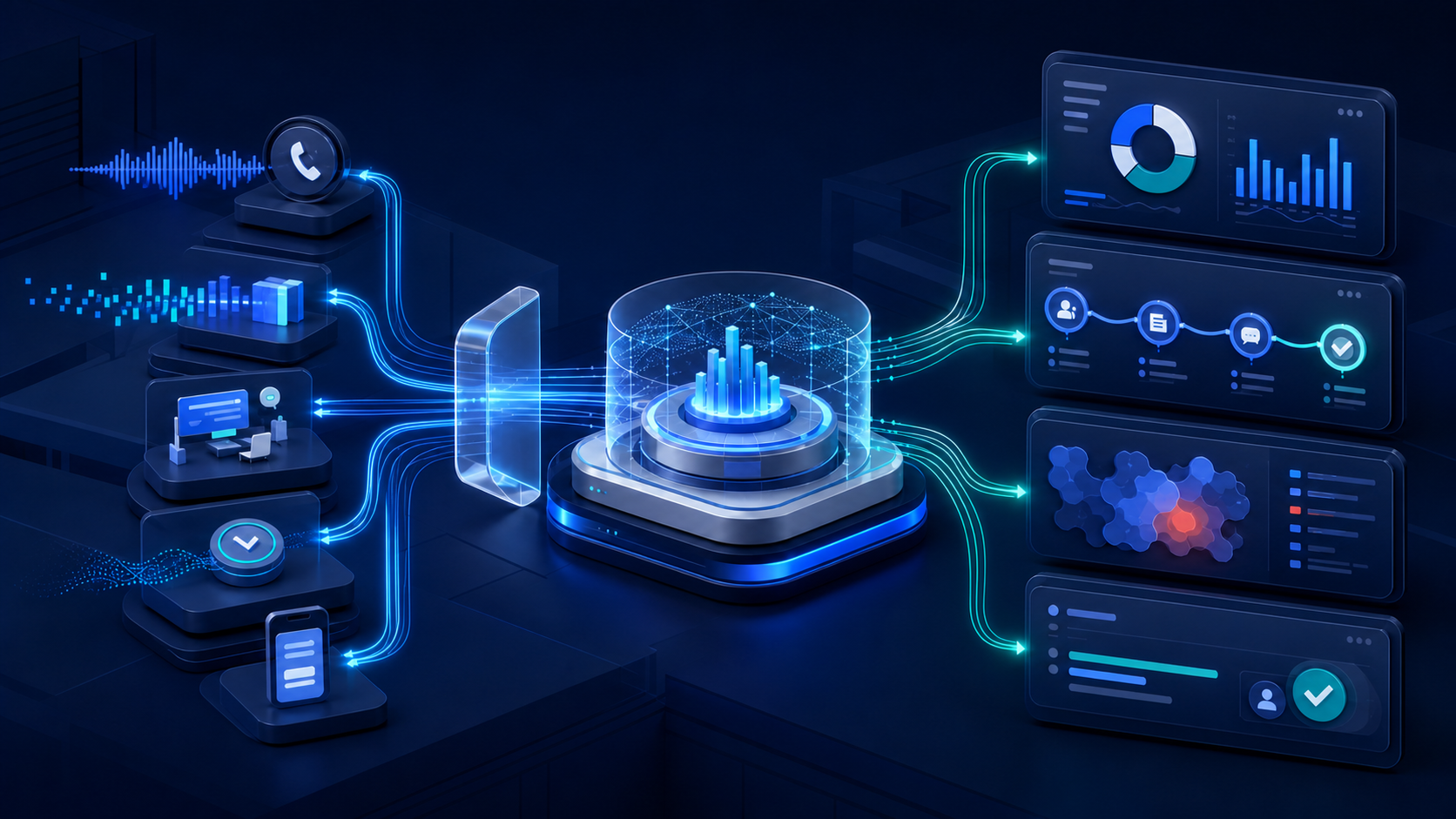
Labiba Sada CX Enterprise is a proprietary, integrated solution that connects the beneficiary’s voice with the service reality. Through direct Talaphony integration, calls, queues, waiting, transfers and outcomes become context for discovering where a journey breaks, what improvement deserves priority and whether the action made a difference.
Designed for: Government beneficiary-experience, service-quality, digital-transformation, contact-centre, service-centre and performance teams.
Athar combines what the beneficiary reported with what the service recorded, while keeping source, context, confidence and decision ownership visible.
Receives authorized call, queue, transfer, waiting and outcome events directly from Talaphony so experience signals can be interpreted in their operating context.
Unifies surveys, feedback, complaints, contact outcomes and approved digital-channel signals in one analyzable experience record.
Suggests themes, sentiment, friction points and potential causes while showing confidence and context to the human reviewer.
Connects what beneficiaries report with waiting, transfers, repeat contact and service outcome patterns.
Turns an insight into an owned improvement action with priority, due date and status, then measures the result after implementation.
Provides journey, service, branch and theme views with source traceability, review history and role-based access.
Sada connects signal to contextSuggests the friction point while keeping the decision with an authorized reviewer Direct operating source
Every insight keeps its context and source; every action has an owner; every result returns to measurement instead of ending in a report.
Talaphony, surveys, complaints and agreed channels.
Service, channel, branch, time and outcome under a consistent journey identity.
Theme, sentiment, friction and correlations with visible confidence.
Human approval followed by owner, priority, due date and follow-up.
Compare post-action results with the baseline, then update priorities.

Connect call theme, transfer and outcome to later contact and identify the friction that sends people back to the channel.
Compare waiting, transfers and visits with beneficiary feedback by branch, service and period.
Rank themes by volume and operating impact, then follow the owner, action and result after implementation.
Select one priority service, a defined Talaphony source and available beneficiary signals. Build a baseline, friction map and improvement backlog that support a measured scale decision.
We distinguish what the product provides from what the project must validate, so promises remain testable and reviewable.
It does not stop at survey or sentiment results. It links authorized feedback to operating events such as waiting, transfer, repeat contact and service outcome, then turns insight into an owned, measurable improvement action.
A direct connector is configured for the agreed Talaphony call, queue, transfer, waiting and outcome events. Fields, frequency, permissions and retention are documented in the project scope.
Authorized transcripts or recordings can be analyzed according to the approved environment and scope. The system suggests themes, sentiment, friction and potential causes with confidence visible; review and decisions remain with authorized people.
Yes. Surveys, complaints, digital services and other service systems can be connected after interfaces, journey identity and access are validated.
No fields or retention periods are assumed. Necessary data, minimization or masking, access, retention, logging and deployment are agreed with the entity before activation.
No. It accelerates signal consolidation, pattern discovery and prioritization. The team validates meaning, action and priority, then measures the result.
Start with one priority service or journey, one defined Talaphony source and agreed baseline measures. The pilot produces a friction map, improvement backlog and early evidence for a scale decision.
Share the target service, its channels and what is available in Talaphony. First-session output: an initial scope, required sources, success measures and recommended delivery step, without a commitment to scale.