


One workspace per transaction
Keeps documents, correspondence, participants, tasks, due dates and decisions under one transaction number and context.

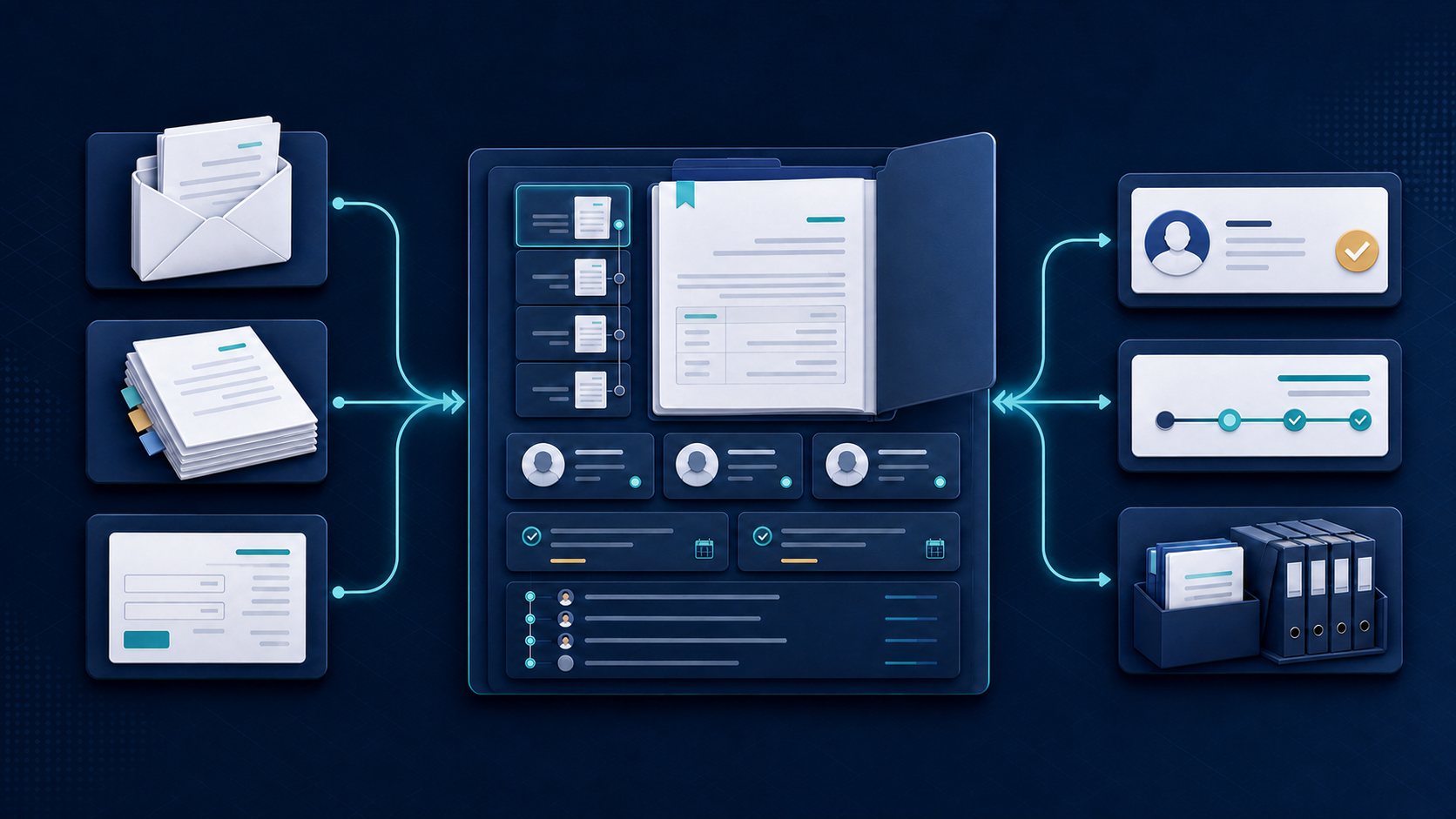
A proprietary, integrated shared documents and transactions platform that keeps the file, action, participant and decision in one workspace. Labiba Mahwar Transactions Enterprise preserves transaction context from intake to closure, while AI assists with understanding and organizing documents and authorized people retain access, approval and decision control.
Designed for: Government correspondence, document and records, legal, procurement, committee-secretariat, shared-services and digital-transformation teams.
Every document knows its transaction, every task has an owner and every approval retains its context, version and time.
Keeps documents, correspondence, participants, tasks, due dates and decisions under one transaction number and context.
Applies role-based access for viewing, adding, reviewing and approving across departments and invited parties within the approved scope.
Suggests classification, field extraction, attachment matching and completeness or duplication checks, with confidence visible to the human reviewer.
Configures assignment, comments, versions, approvals and escalation by transaction type and entity role.
Keeps incoming and outgoing correspondence, next actions, owners and due dates attached to the transaction instead of scattered across email and folders.
Shows status, time, blockers and decisions with traceability to source, version, participant and change history according to permissions.
The value is not another storage location. It is a governed context that shows who did what, on which version, and what action or decision comes next.
One transaction contextDocuments, versions, participants, tasks, approvals and decision historyMahwar builds the transaction record while work happens, so teams do not have to reconstruct the story from messages and scattered copies during every review or escalation.
A document, correspondence item or form enters with context and a reference.
Suggested classification, extraction and matching reviewed by an authorized user.
Assignment, comments, versions and tasks across roles and departments.
A recorded human decision followed by correspondence, action or an agreed integration.
A complete file, final state and searchable, measurable history.

Keep the draft, attachments, legal and financial comments, versions, approvals and correspondence under one transaction.
Connect meeting papers with participants, comments, recommendation, decision and subsequent actions with due dates.
Make ownership, requirements, attachments, transfers and final response visible instead of repeatedly asking for status.
Choose a transaction with visible volume and impact. Establish its templates, roles, stages and baseline, then measure cycle time, status clarity and file completeness before scaling.
We distinguish what the platform provides from what requires validation, integration or an approved policy, so commitments remain testable and reviewable.
A folder stores files. Mahwar also stores transaction context: participants, roles, versions, comments, tasks, due dates, approvals and the final decision in one traceable record.
Not necessarily. It can operate as a shared transaction workspace over current sources, integrate with them or cover a new workflow. The system of record and integration pattern are validated during discovery.
It assists with document classification, field extraction, attachment matching, summarization, suggested routing and completeness or duplication checks. Results and confidence remain visible to the reviewer; the system does not approve a decision for an authorized person.
Yes. Workspaces, roles and permissions can be configured for participants inside the entity and invited parties according to transaction type and entity policy, without granting broader access than needed.
An approved e-signature service or existing approval path can be integrated after the provider, interfaces and regulatory requirements are validated. No provider or signature level is assumed before project approval.
Identity, access, classification, encryption, logging, backup, retention, disposal and deployment are documented in the security and contractual design approved with the entity.
Start with one transaction type across two or three departments. Establish the baseline, templates, roles and measures, then compare cycle time, status clarity, file completeness and manual follow-up before scaling.
Share the transaction type, participating departments and document sources. First-session output: an initial scope, journey and roles, integration requirements and success measures, without committing to scale.